


Ukraine Tests Flying Ambulance Drone for Frontline Casualty Evacuation
Last update: October 16, 2026
Disclaimer: This website may contain affiliate links, which means we may earn a commission if you click on the link and make a purchase. We only recommend products or services that we personally use and believe will add value to our readers. Your support is appreciated!
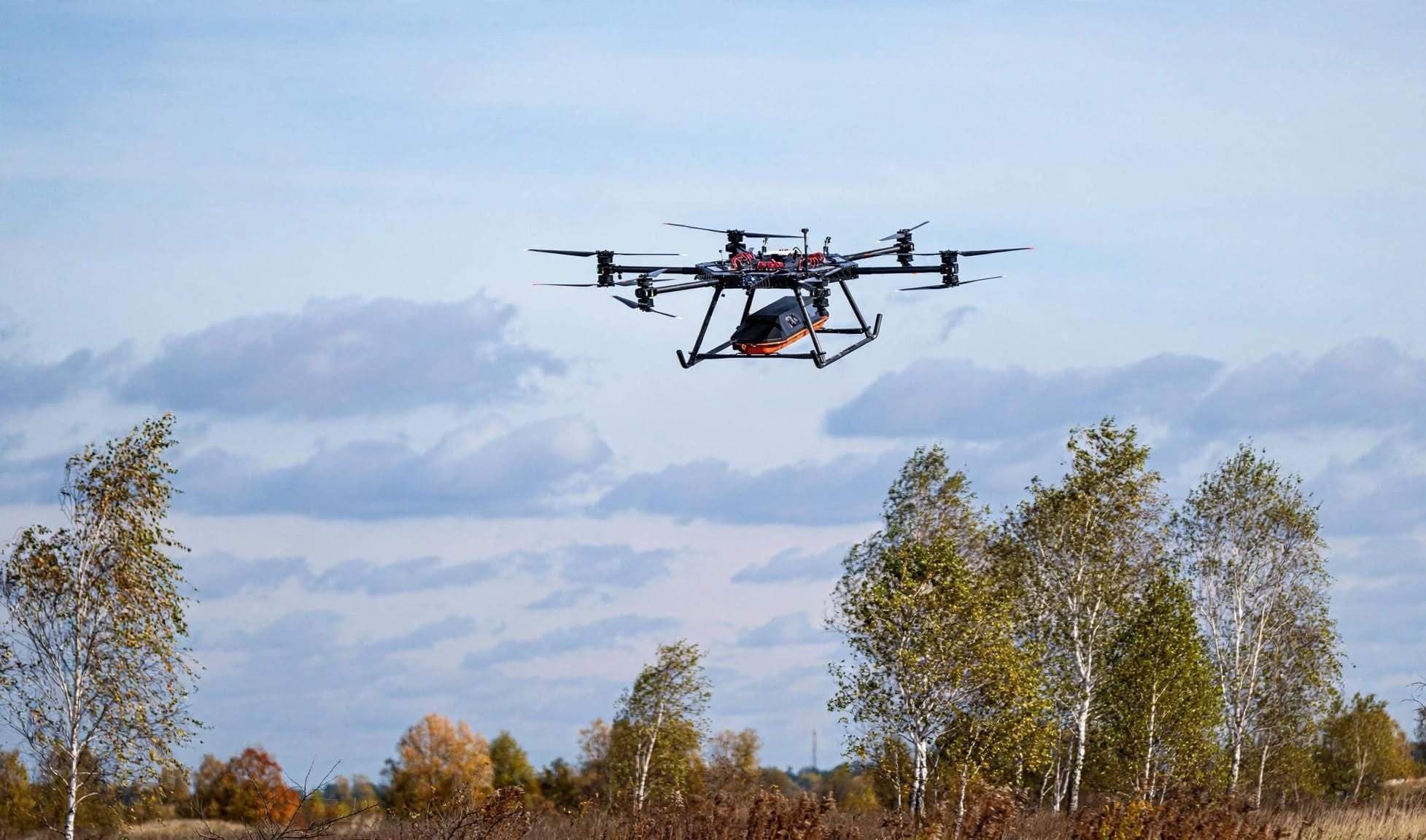
What if a wounded soldier didn't have to wait hours — or days — to be rescued because the roads are blown up and the fields are mined? Ukraine thinks it has the answer, and it flies.
In a war where getting to a hospital can be more dangerous than the injury itself, Ukraine has just unveiled something straight out of a sci-fi film — a flying ambulance drone.
The aircraft, called StarGate and built by Ukrainian defence firm SkyFall, is designed to do one job: reach casualties where no ground vehicle can.
And we're talking about a serious piece of kit.
How does it work? The drone can reportedly lift up to 150kg — that's a fully-kitted soldier — and hit speeds of up to 105 km/h. It flies over the very things that kill medics: minefields, rivers, shattered roads and artillery-cratered tracks. It uses Starlink plus SkyFall's own L-Link system and AI-assisted tech that is designed to keep flying even when Russia is jamming satellite navigation — a huge problem on the front right now. In the same demo, it was also shown deploying a net to intercept a hostile drone. Clever, right?
Why this matters so much?
Ask any combat medic and they will tell you the same thing: time is life. In military medicine there's the concept of the "golden hour" — if you can get a wounded soldier to a surgeon within 60 minutes, their chance of survival skyrockets.
In Ukraine, that golden hour has become almost impossible. The British Ministry of Defence estimated last year that casualty evacuation on some parts of the 1,000km front can take 6 to 12 hours, sometimes days, because ambulances have to detour around minefields — Ukraine is now the most heavily mined country on earth, according to the UN — and come under drone attack themselves.
This drone could cut that journey from hours to literally minutes. That is not just a tactical advantage; it is a mother, a father, a son getting home alive.
We have seen this evolution before. In the First World War, it was stretcher-bearers on foot. In Vietnam, it was the Huey helicopter that revolutionised medevac and cut US battlefield mortality from 2.5% in WW2 to around 1% in Vietnam. In Afghanistan, Britain's MERT teams brought the A&E to the battlefield. Now, Ukraine is writing the next chapter: unmanned, remotely piloted rescue, where you don't risk another life to save one.
Is this really new?
Flying ambulances aren't new — but unmanned heavy-lift medevac drones are. The US has experimented with the Kaman K-MAX and more recently the Draganfly and Elroy systems, but nothing has been deployed at scale for hot casualty extraction under electronic warfare conditions.
What makes StarGate different is the context it was built for. It is not designed for a clean, safe test range in California. It is designed for a battlefield where GPS is spoofed, where FPV drones hunt anything that moves, and where a white vehicle with a red cross is, tragically, often deliberately targeted.
The fact it uses Starlink for command and a separate L-Link for resilience, plus AI to navigate when jammed, tells you it was built by people who live this war.
What's next — and a reality check
Let's be honest, SkyFall has yet to publish any performance data, and the drone's ability to actually evacuate a bleeding, unstable casualty in mud, wind and under fire remains to be independently confirmed. Can it land safely with a casualty? How does it stabilise them? How noisy is it? How far can it really fly with a full 150kg load?
Those are the questions the frontline brigade testing it will need to answer.
But if it works — even half as well as promised — it could change the calculus of battlefield medicine not just for Ukraine, but for every army watching. NATO will be watching very closely indeed.
For now, one prototype is out there in the mud. The hope is that soon, there will be dozens.
As first reported by cbinewstv.com
#UkraineWar #Ukraine #DroneWarfare #MilitaryTech #MedEvac #FlyingAmbulance #SkyFall #StarGate #DefenceTech #BritishArmy #Innovation #cbinewstv