


Sudan Ceasefire Talks Enter Sixth Round in Geneva
Last update: October 22, 2026
Disclaimer: This website may contain affiliate links, which means we may earn a commission if you click on the link and make a purchase. We only recommend products or services that we personally use and believe will add value to our readers. Your support is appreciated!
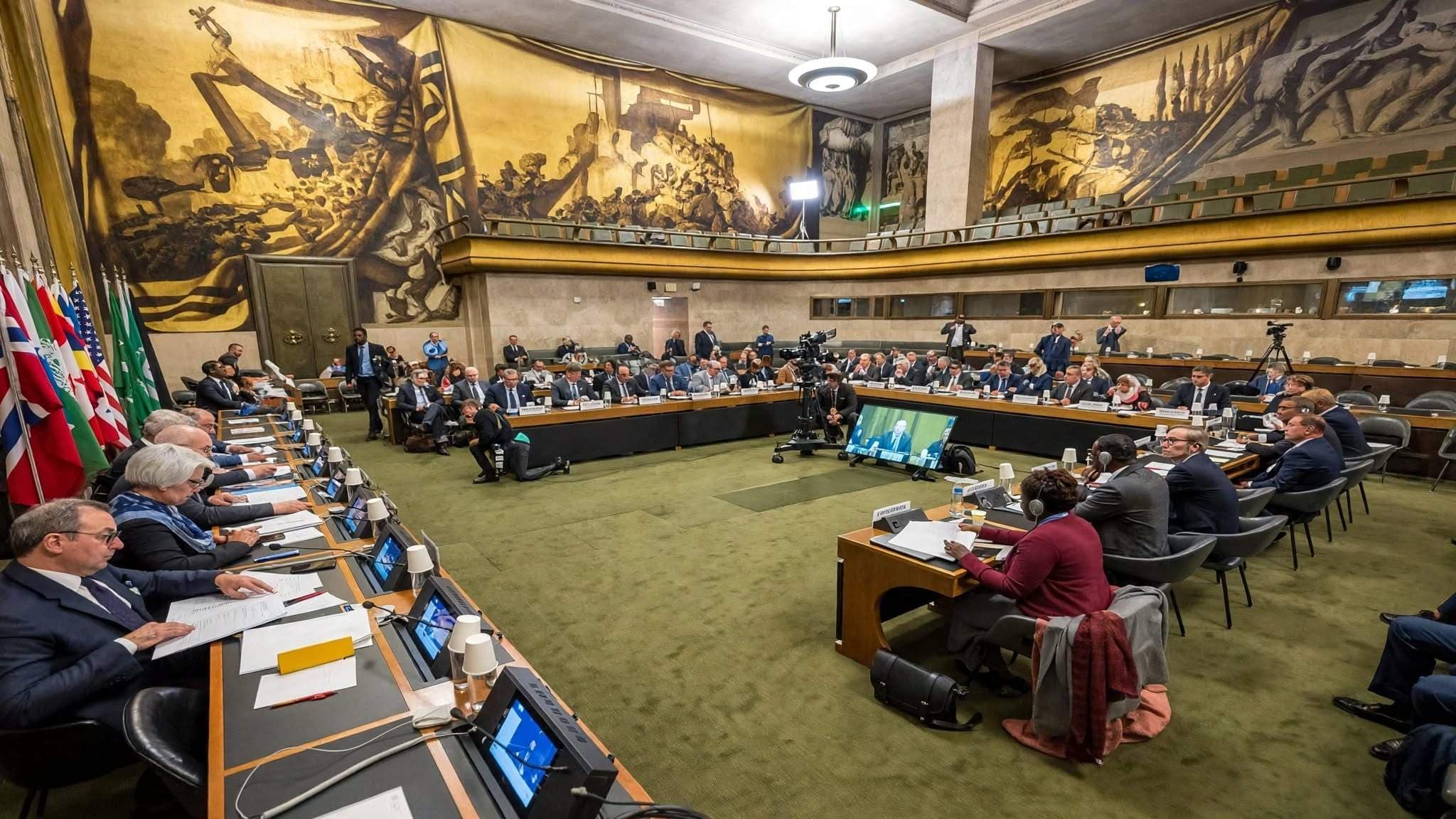
Four years in, no warring generals at the table, but nearly two dozen countries in the room — can Geneva finally force an end to the war the world keeps looking away from?
The world’s forgotten war was back in the spotlight in Geneva on Wednesday.
Here’s the breakdown of what actually happened, and why you should care.
In Their Own Words
Swiss diplomat Alexandre Fasel didn’t mince his words:
"The war in Sudan is in its fourth year... The war in Sudan has become a drone war. It kills mostly civilians. Famine like conditions persist in Darfur, the Kordofan state and elsewhere... It is the war that drives this hunger."
He also warned the conflict is now bleeding across borders: "Cross-border inter linkages and regional dynamics are worrisome. We are hearing of spillovers into neighbouring countries. The war is not only affecting people in Sudan, but also a threat to regional stability."
UN Special Envoy for Sudan, Pekka Haavisto, echoed what Sudanese people keep telling him:
"At the heart of that purpose must be an unwavering commitment to ending the war, alleviating the suffering of the Sudanese people, and upholding the right to a future of peace, security and dignity in a united Sudan... This war must end."
How Did We Get Here?
If you’re new to this, let’s rewind. This isn’t a decades-old civil war that never stopped — it’s a very modern power struggle gone catastrophically wrong.
In April 2023, two former allies turned on each other. On one side, General Abdel Fattah al-Burhan who heads the Sudanese Armed Forces. On the other, General Mohamed Hamdan Dagalo, known as Hemedti, who leads the RSF — a powerful paramilitary group that grew out of the Janjaweed militias infamous for atrocities in Darfur in the 2000s.
They had jointly overthrown Sudan’s fragile civilian transition after the 2019 ousting of long-time dictator Omar al-Bashir but then fell out over how to integrate the RSF into the regular army and who would control Sudan’s future.
What started as street battles in Khartoum has morphed into what officials now call a full-blown drone war, with fighting raging across Darfur, Kordofan, and central Sudan. Every ceasefire has collapsed.
By The Numbers:
This is where it gets staggering, and heartbreaking.
The UN now calls Sudan the world’s largest humanitarian crisis:
- Nearly 34 million people — about two-thirds of Sudan’s entire population — need humanitarian assistance. OCHA says around 33.7 million will still need help in 2026.
- Around 11 million displaced — the largest displacement crisis on the planet. Families have been uprooted multiple times, many now living in makeshift camps in Darfur or across the borders in Chad, South Sudan and Egypt.
- Tens of thousands killed, though the true death toll is thought to be far higher because bodies are not being counted.
- Famine confirmed in parts of Darfur and Kordofan, with 21 million people facing acute food insecurity and 20 million needing health support.
- 8 million children out of school and humanitarian funding at just 36% of the $4.2 billion requested last year.
Behind those stats are mothers walking for days to find food, doctors operating without anaesthetic, and children who have known nothing but war since they were toddlers.
Why it Matters — Especially to us?
You might be in Lagos reading this and thinking, “Geneva feels far away.” It isn’t.
First, this is a test of whether international law means anything. As Fasel put it, “The Geneva Conventions are very clear: the protection of civilians and humanitarian access must not wait for a ceasefire.”
Second, regional stability. When Sudan collapses, arms, refugees and hunger spill into the Sahel, into Chad, into Egypt, into the Red Sea shipping lanes that affect global food and fuel prices. The UN’s humanitarian office has already warned about “staggering” spillover.
And third, it’s about attention. Ukraine and Gaza dominate headlines, but Sudan quietly overtook them both in human suffering.
So, What is This Geneva Process?
Think of it less as a peace negotiation and more as peace-prep.
Since the warring parties won’t sit together, the UN and Switzerland are trying to get everyone else — the US, Saudi Arabia, Egypt, UAE, African Union members, European donors — to agree on ONE coordinated plan, so that when the generals do come, there’s no forum-shopping.
Wednesday’s meeting was the sixth. Talks have focused on three non-negotiables: immediate protection of civilians, unimpeded humanitarian access across conflict lines, and a pathway to a civilian-led transition.
What Next?
1. Keep pressure on access: The immediate ask from Geneva is not even a ceasefire yet — it’s letting aid trucks through. Agencies aim to reach 20 million of the most desperate in 2026.
2. Bring the generals to the table — for real: Without SAF and RSF representation, these talks remain consultative. Mediators will now shuttle the unified proposal to Port Sudan and to RSF leadership.
3. Funding: With donor fatigue, the UN is begging for money. If funding stays at 36%, most of those 34 million won’t get help.
4. Watch Kordofan and Darfur: That’s where famine conditions are most severe and where drone strikes are hitting civilian areas hardest.
As Haavisto said, the message from Sudanese people everywhere is simple and unanimous: This war must end.
We’ll keep tracking it for you here on cbinewstv.com.
Source: cbinewstv.com
#Sudan #SudanWar #GenevaTalks #UN #HumanitarianCrisis #Darfur #Kordofan #AfricaNews #WorldNews #CeasefireNow #CBINewsTV