


Nigeria, Türkiye Declare War on Fake News
Last update: November 9, 2026
Disclaimer: This website may contain affiliate links, which means we may earn a commission if you click on the link and make a purchase. We only recommend products or services that we personally use and believe will add value to our readers. Your support is appreciated!
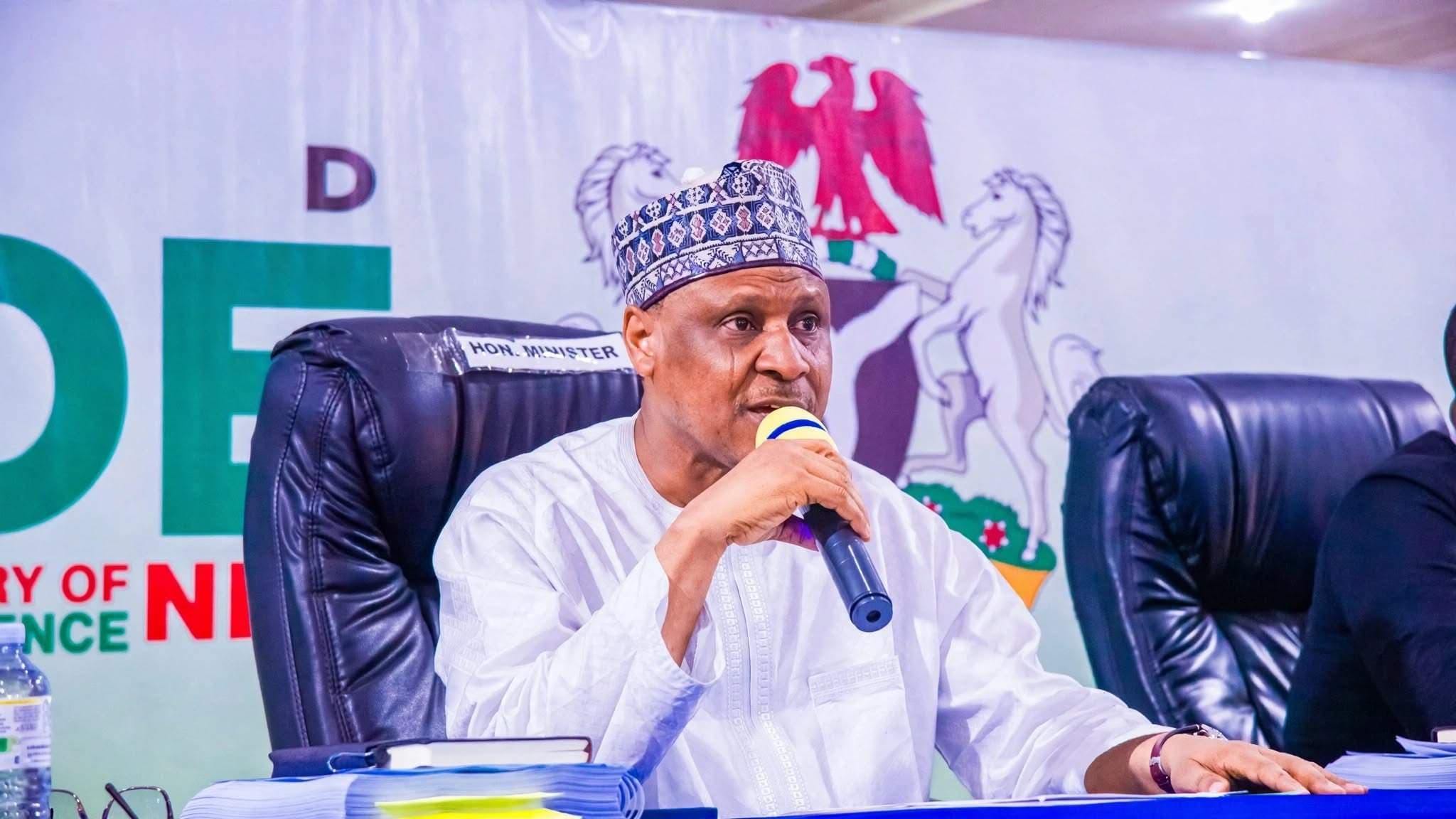
Nigeria–Türkiye Misinformation Pact: Idris, Duran Agree on New Media Deal at TRT World Forum Istanbul.
You have seen it before. A shocking video lands in your WhatsApp group. A voice note claims something terrible has happened in a town you know. You forward it before you check it — and by evening, everybody believes it.
That is exactly the problem Nigeria and Türkiye say they are now determined to tackle together.
So, what actually happened?
On Saturday, 7 November 2026, on the sidelines of the TRT World Forum in Istanbul, Nigeria’s Minister of Information and National Orientation, Mohammed Idris, sat down with Türkiye’s Head of the Directorate of Communications, Prof. Burhanettin Duran.
It was not just a photo opportunity. Both men agreed to deepen cooperation on strategic communication, media development, cultural exchange — and, crucially, the joint fight against misinformation and disinformation.
The Forum itself tells you how big the stage was. This was the 10th edition of the TRT World Forum, held on 6–7 November at the Istanbul Congress Centre under the theme “A World Without a Centre: Who Leads When the Rules Run Out?” Organised annually by Turkish public broadcaster TRT since 2017, it brings together politicians, academics, journalists, artists and civil society leaders to debate pressing global challenges.
A relationship that did not start yesterday
This Istanbul meeting did not come out of nowhere.
Nigeria is currently Türkiye’s largest trading partner in sub-Saharan Africa, with more than 50 Turkish companies operating in the country.
Earlier this year, President Bola Tinubu made a state visit to Ankara. During that visit, Nigeria and Türkiye signed nine cooperation agreements covering defence collaboration, trade and economic coordination, higher education, media and communication, and diaspora issues.
Trade between the two countries reached $688.4 million in the first 11 months of 2025, but both sides have set an ambitious target of $5 billion in the medium term.
In other words, this is a partnership that is already about guns, trade, energy and education. Now, information has joined the list — and frankly, it may be the most important item of all.
Minister Idris thanked Türkiye for the invitation to the Forum, praised its growing influence globally and its expanding engagement with Africa, and described Tinubu’s earlier visit as a milestone that opened new opportunities for broader, mutually beneficial cooperation.
Prof. Duran returned the compliment, describing Nigeria as a strong regional and international partner whose strategic position, cultural diversity and professional resources make it an important ally in promoting global peace, security and development.
Why this is about more than ministers and meetings.
Let us be honest: misinformation in Nigeria is not abstract. It is personal.
It is the fake security video that makes a whole community panic. It is the AI-generated image presented as a real attack. Fact-checkers at DUBAWA have repeatedly found Facebook pages publishing AI-generated videos depicting fictitious security incidents across Nigeria.
It is the doctored claim about religion or ethnicity that spreads faster than any correction ever can. Recent reporting has warned of fake reports citing unverified statistics designed purely to inflame emotions.
And it is happening in a country where trust in what we see online is already fragile. Globally, 58% of people say they worry about telling what is real from what is fake online when it comes to news, rising to 84% in Nigeria.
Research also suggests approximately 75% of fake news in Nigeria originates from social media platforms such as Facebook, Twitter/X, and WhatsApp, compared to 15% from traditional media.
That is why Idris did not mince words in Istanbul. He described fake news, misinformation, disinformation and the misuse of artificial intelligence as growing threats to public trust, social cohesion and national and international security.
Think about it: one viral lie can close a market, spark a protest, ruin a reputation, or put lives at risk before the truth has even had time to put its shoes on.
Why it matters:
1. Elections are coming.
As preparations for Nigeria’s 2027 general elections continue, misleading narratives are already entering public discourse. Who controls the information environment will shape what voters believe.
2. AI has changed the game.
It is no longer just a badly written rumour. Now, anyone with a phone can generate a realistic video, clone a voice, or fake a document. Idris stressed the need for responsible deployment of emerging technologies and improved media literacy.
3. Nigeria is now leading, not just following.
Nigeria is host to the world’s first Category 2 International Media and Information Literacy Institute (IMILI), a UNESCO Category 2 Centre. The decision was taken at the 43rd UNESCO General Conference from 30 October to 13 November 2025, in Samarkand, Uzbekistan.
The Institute, housed at the National Open University of Nigeria (NOUN) in Abuja, was officially launched on 29 and 30 April 2026 in Abuja.
Idris highlighted it in Istanbul as an important platform for advancing international collaboration, professional training and resilience against misinformation.
In plain English: the world is now looking to Abuja to help teach the world how to spot a lie.
4. Language matters.
Idris specifically praised TRT for expanding its presence in Africa, particularly through its Hausa-language service, engagement of Nigerian media professionals and provision of training opportunities.
That is significant. Hausa is spoken by tens of millions across West Africa. When a major international broadcaster speaks to people in their own language, it builds trust — and trust is the antidote to misinformation.
Misinformation vs Disinformation vs Fake News — what is the difference?
People use these words interchangeably, but they are not quite the same:
- Misinformation: False information shared without intending to deceive. You forwarded it because you thought it was true. We have all done it.
- Disinformation: False information shared deliberately to mislead, manipulate or cause harm. This is the organised stuff — troll farms, doctored videos, coordinated campaigns.
- Fake news: A catch-all phrase for fabricated stories dressed up to look like real journalism. Often designed to go viral.
- AI misuse: Using artificial intelligence to create fake images, videos, voices or articles that look real. This is the newest — and fastest-growing — threat.
Nigeria and Türkiye say they want to tackle all four, together.
What was actually agreed?
Here is what came out of the meeting:
- Stronger institutional partnerships in communication and broadcasting.
- Prospect of signing Memoranda of Understanding (MoUs) between Turkish institutions and Nigeria’s public media organisations, including the Nigerian Television Authority (NTA), Federal Radio Corporation of Nigeria (FRCN), News Agency of Nigeria (NAN) and Voice of Nigeria (VON).
- Those MoUs would provide a framework for cooperation in broadcasting, content exchange, professional training and technical development.
- Deeper cultural ties and professional exchanges, particularly through stronger institutional partnerships.
- An invitation for Nigeria to participate in the Sixth International Strategic Communication Summit, scheduled for Istanbul in January 2027, which will focus on strengthening international collaboration and developing strategic communication responses to emerging global challenges.
- **An invitation from Idris** for Prof. Duran to visit Nigeria in the near future to consolidate the relationship and explore practical areas of cooperation.
Both officials reaffirmed their commitment to sustained engagement and stronger institutional collaboration, with a shared determination to harness communication and cultural diplomacy to advance peace, security and mutual development.
What to watch for
1. The MoUs: Will the agreements with NTA, FRCN, NAN and VON actually get signed — and what training, equipment and content-sharing will they unlock?
2. Duran’s visit to Nigeria: If it happens, expect concrete announcements on training, exchanges and joint projects.
3. January 2027 Summit: Nigeria’s participation in Istanbul’s Sixth International Strategic Communication Summit will be the first big test of this new pact.
4. IMILI in action: How will Nigeria use its UNESCO institute to train journalists, teachers, students and ordinary citizens to spot AI fakes?
5. What you do: Pause before you forward. Check the source. Search for the same story on a credible outlet. If it sounds too shocking to be true, it probably needs checking.
Because in the end, governments can sign all the MoUs they want. The real fight against misinformation starts in our group chats, timelines and living rooms.
Credit: cbinewstv.com
#CBINewsTV #NigeriaTürkiye #StopFakeNews #Misinformation #Disinformation #MediaLiteracy #TRTWorldForum #MohammedIdris #BurhanettinDuran #Nigeria #Türkiye #Istanbul #AI #FactCheck #IMILI # UNESCO #PeaceAndSecurity #Africa