


Madrid Mourns After Deadly Spain Train Collision
Last update: October 29, 2026
Disclaimer: This website may contain affiliate links, which means we may earn a commission if you click on the link and make a purchase. We only recommend products or services that we personally use and believe will add value to our readers. Your support is appreciated!
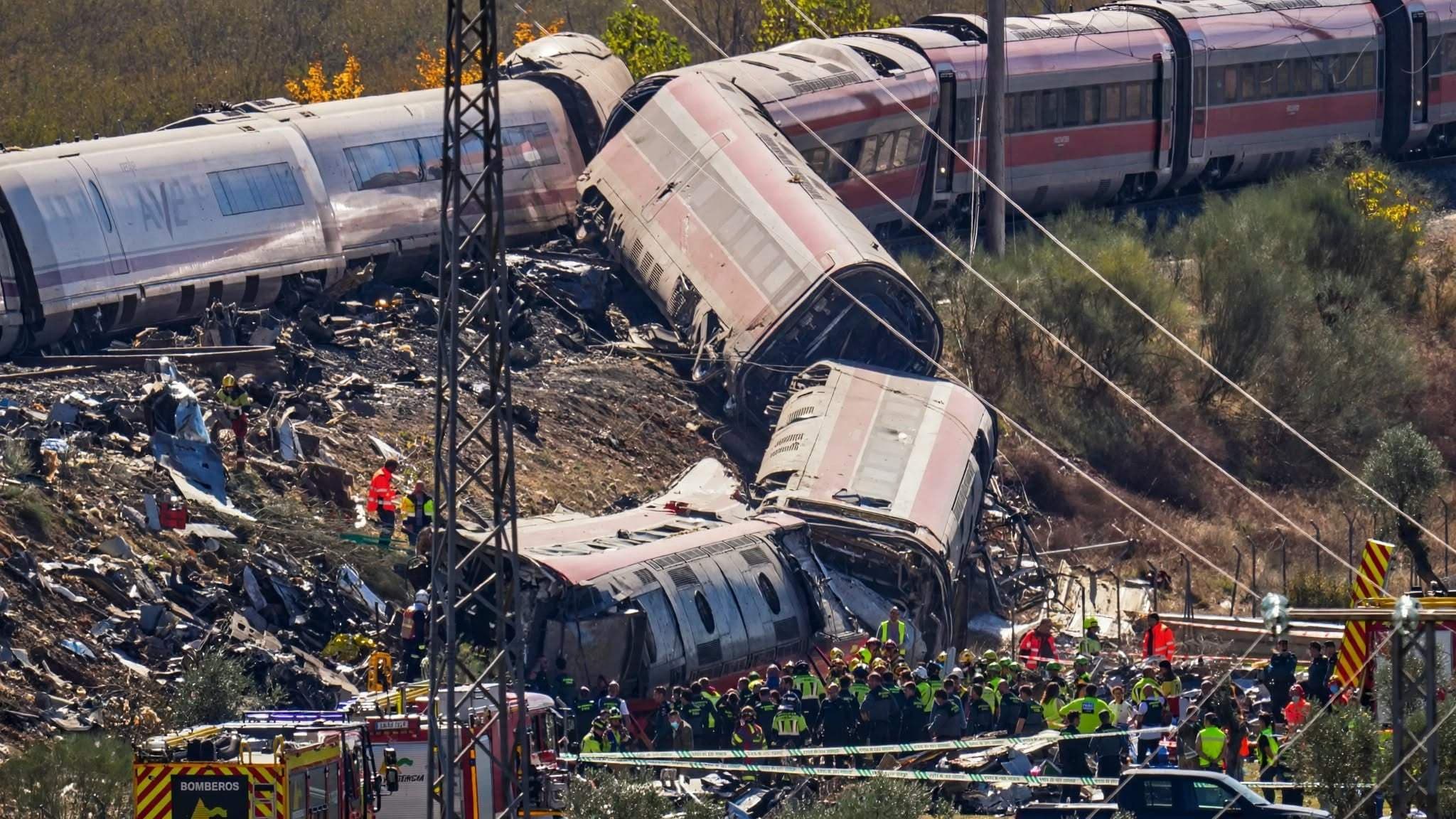
It was supposed to be a routine morning run from Madrid to Seville. By 9.15 am, it had become one of Europe's deadliest rail disasters this century.
So, here is what happened, in plain terms.
As darkness fell over the fields near Urda, the work didn't stop. Rescue crews were still out there, under harsh floodlights, trying to pull apart carriages that looked like crushed tin cans. You can see it in the footage — a huge crane hoisting what looks like a wheel assembly straight off the tracks while teams pick through the wreckage. It's painstaking, heartbreaking work.
On Tuesday morning, 28 October, at around 8.54 am to9.15 amm local time, two high-speed trains collided near Urda station in Toledo province, about 120km south of Madrid on the Madrid-Andalusia high-speed line.
It was a rear-end collision. An Iryo train had stopped on the track, and a Renfe AVE that left Madrid bound for Seville slammed into the back of it, derailing carriages.
At least 68 people have died, and more than 100 have been injured, with 15 still in critical condition. Early reports from Castilla-La Mancha say 44 of those who died were on the Iryo train and 24 on the AVE. The toll is still provisional.
Last night, dozens gathered in Cibeles Square, right outside Madrid City Hall, for a minute's silence. It was organised by the Spanish Federation of Municipalities and Provinces. Opposition leader Alberto Núñez Feijóo, Madrid regional president Isabel Díaz Ayuso, Mayor José Luis Martínez-Almeida and central government delegate Pilar Trinidad were all there.
But grief quickly turned to anger. Some mourners held placards reading "Corruption kills" and chanted for Transport Minister Óscar Puente to resign. When you have two major crashes in nine months, people start asking hard questions.
Why it matters and some background you need:
This is Spain's second deadly rail collision this year — and that is what has really shaken people.
Just nine months ago, in January, the Adamuz disaster in Andalusia killed 46 people and injured more than 150 when a high-speed train derailed. Now this.
To put it in context, Spain runs Europe's largest high-speed network — over 4,000km of AVE track. It is usually seen as one of the safest in the world. That reputation took a massive hit in 2013, when an Alvia train from Madrid to Ferrol derailed on a sharp bend at Angrois outside Santiago de Compostela, killing 80 people. It was travelling at nearly 190km/h on an 80km/h curve. It remains Spain's deadliest modern rail disaster.
Until this week, that 2013 crash was the benchmark. The Urda collision is now the second-worst of the century in Spain, and one of Europe's deadliest since 2000.
Why did this happen?
We don't have a final answer yet, and investigators are being very careful.
Preliminary accounts point to a failure in the LZB signalling system — that's the system that controls speed and keeps trains apart — followed by a disputed decision from the control centre to allow the Renfe train to resume normal speed while the other train was still stationary on the line.
Spain has declared three days of national mourning, and Castilla-La Mancha activated its emergency plan PLATECAM at 9.15 am, calling in the Military Emergency Unit by 10:30 a.m.
What happens next?
1. The rescue-to-recovery phase: Crews will continue lifting wreckage with cranes throughout today to ensure no one is still trapped.
2. The black boxes: Investigators from Adif, Renfe, and the Transport Ministry will pull the data recorders from both trains to understand exactly what the signalling told drivers.
3. The political fallout: Expect huge pressure on Minister Óscar Puente. With two fatal crashes in under a year, the opposition is already demanding a full parliamentary inquiry into rail maintenance and safety investment.
4. Support for families: A victim identification and family assistance centre has been set up in Toledo. Hospitals in Madrid and Castilla-La Mancha remain on high alert.
It is a gut-wrenching moment for Spain. A country that prides itself on its bullet trains is now mourning twice in one year. Our thoughts are with the families still waiting by the tracks.
As reported by cbinewstv.com
#SpainTrainCrash #Toledo #Urda #Madrid #AVE #Iryo #SpanishNews #EuropeNews #BreakingNews #cbinewstv