


First in 66 Years: Tinubu Receives Proposed $14bn UN Budget
Last update: October 20, 2026
Disclaimer: This website may contain affiliate links, which means we may earn a commission if you click on the link and make a purchase. We only recommend products or services that we personally use and believe will add value to our readers. Your support is appreciated!
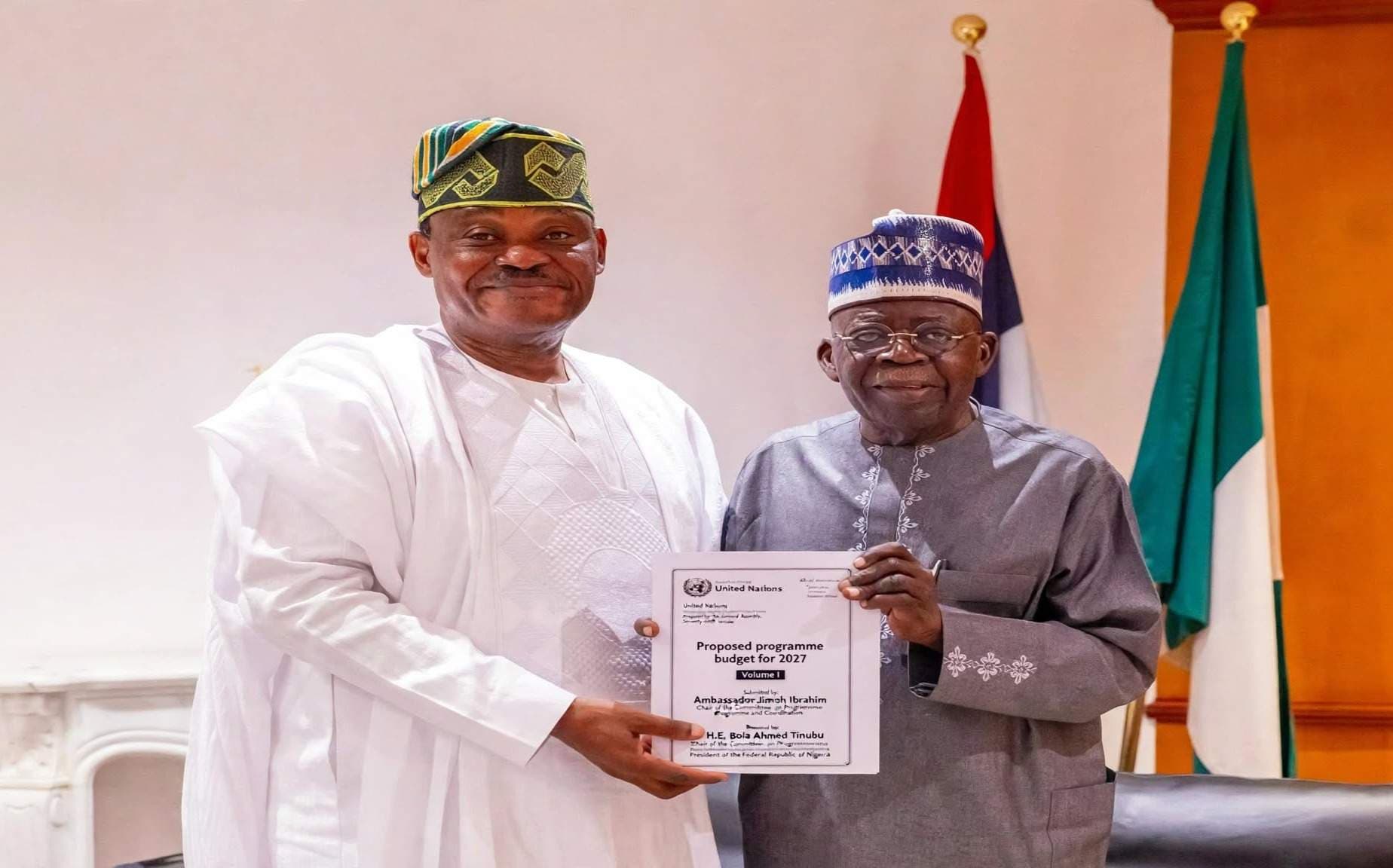
For the first time since Nigeria joined the United Nations as its 99th member on 7th October 1960, a Nigerian President has held the entire proposed UN budget in his hands. And yes, it comes in seven hefty volumes.
ICYMI – history was made at the Aso Rock Villa, Abuja.
President Bola Ahmed Tinubu received copies of the proposed 2027 United Nations budget on Monday from Nigeria’s Permanent Representative to the UN, Ambassador Jimoh Ibrahim.
Ibrahim, who chairs the powerful UN General Assembly’s Fifth Committee, responsible for administrative and budgetary matters, walked into the State House with the seven-volume document after UN Secretary-General António Guterres formally submitted it to his committee.
Speaking to State House correspondents afterwards, Ibrahim couldn’t hide his excitement.
“This is the presentation of the United Nations proposed budget for 2027 that was presented to me by the General Assembly, by the Secretary-General,” he said. “So, it has to be presented to my country because my country is a member of the United Nations. I share the budget at the committee, so the appropriate thing to do is to bring the budget home and deliver it to the President.”
“This is the first time in 66 years that Nigeria will chair the Budget and Administrative Committee. The first time.”
The money – How much are we talking?
Here’s where it gets interesting. Ibrahim said the proposal covers two main pots:
* Regular budget: ~ $3.4 billion for the UN’s day-to-day work – from running the Secretariat to development programmes.
* Peacekeeping budget: ~ $8.5 billion for the blue helmets worldwide.
He put the total package at about $14 billion – roughly N40 trillion at current rates. Quick maths though: $3.4bn + $8.5bn = $11.9bn. That gap of over $2bn? That’s likely for international tribunals, special political missions and the UN’s ongoing construction projects – like the $267 million UN conference centre he cited in Nairobi, Kenya, as an example of how the UN invests in member states.
For context, the UN’s regular budget has hovered around $3.5bn annually in recent cycles, while peacekeeping has been on a slight decline from over $8bn a decade ago to around $6.5bn last year due to mission closures. So, a proposed $14bn combined figure would be a noticeable uptick, reflecting fresh conflicts and reform pressures.
And he was clear: “This is a proposed budget. It’s at the proposed stage… Figures are adjusted, and then finally the final budget is approved, and spending commences.”
Why does this matter?
Let’s be honest, a UN budget presentation can sound like dry diplomacy. It isn’t.
For 66 years, Nigeria – Africa’s most populous nation, a top troop-contributing country to UN peacekeeping, and a nation that has been on the UN Security Council five times – has never chaired the committee that decides how the UN spends its money.
As former Chief of Staff to the UN Secretary-General, Professor Ibrahim Gambari noted at the presentation, “Since we became the 99th member on October 7, 1960, this is the first time that Nigeria has assumed the chairmanship of the Fifth Committee.”
That matters for pride and for power. Chairing the Fifth Committee means Nigeria is now in the room where consensus is built on who pays what, where cuts happen, and which African priorities – from Lake Chad security to development funding – get cash. Ibrahim described chairing the committee as central to determining how the UN finances its programmes.
Tinubu’s response was simple and human: “I am proud of you.”
What is the Fifth Committee anyway?
Think of it as the UN’s board finance committee. Every single dollar the UN spends must pass through it. The Secretary-General proposes; the Fifth Committee – all 193 member states – argues, trims, haggles, and must reach consensus. Only then does the General Assembly approve. By convention, its chair must be a master consensus-builder, because no budget passes without unanimity.
What’s next?
1. Scrutiny: The seven volumes now go through intense line-by-line negotiation in New York. Member states will fight over posts, travel, and peacekeeping mandates.
2. Adjustments: Figures will shift. The $14bn is a ceiling, not a final cheque.
3. Approval: Expected in December 2026 for the January-December 2027 spending year.
4. For Nigeria: Ibrahim declined to say what Nigeria specifically stands to gain, insisting talks are ongoing. But watch this space – chairmanship often helps push for more UN presence, projects and procurement opportunities for Nigerian professionals.
In short, it’s symbolic, strategic, and historic. Nigeria didn’t just receive a document; it received a seat at the table where the world’s money is divided.
Attribution: cbinewstv.com
#Tinubu #UNBudget2027 #JimohIbrahim #NigeriaAtUN #FifthCommittee #AsoRock #UNGA81 #NigeriaHistory #BreakingNews #cbinewstv