



Durban Court Allows Anti-Migrant Protests With Strict Rules
Last update: October 31, 2026
Disclaimer: This website may contain affiliate links, which means we may earn a commission if you click on the link and make a purchase. We only recommend products or services that we personally use and believe will add value to our readers. Your support is appreciated!
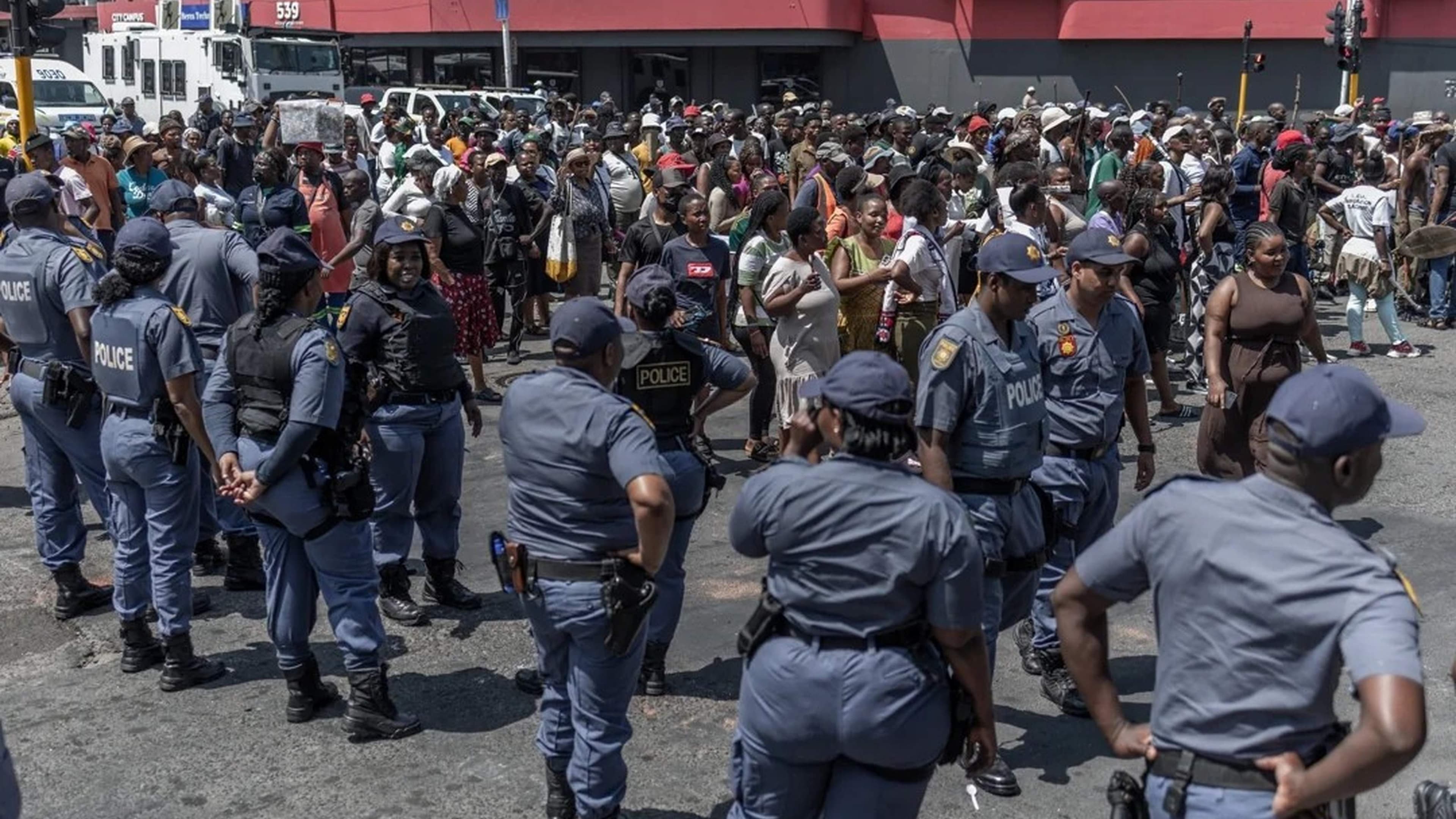
A Durban court says yes to protest, but no to chaos - as South Africa wrestles with a familiar and painful question: who belongs?
You could feel the tension outside the Durban High Court on Friday.
On one side, acting Police Minister Firoz Cachalia is asking a judge to pull the plug on a wave of anti-migrant marches sweeping KwaZulu-Natal. On the other, the leaders of the now-notorious March and March movement, arguing they are just exercising their constitutional right to protest.
Judge Peter Olsen landed somewhere in the middle.
Justice Olsen has allowed March and March to proceed with its planned demonstrations, but only under much tighter conditions after the government amended its urgent application.
Here is what that looks like in practice:
The marches can only happen between 9am and 3pm. No weapons. No face coverings. No destroying property. No setting fire to buildings. It sounds like basic common sense, but those conditions were added for a very specific reason.
Police told the court they had intelligence about an alleged plot to torch the Home Affairs Refugee Reception Centre in Berea - that busy inner-city Durban hub where asylum seekers queue for hours just to get their papers in order.
And in Durban lately, that kind of threat cannot be brushed off.
What is actually happening on the ground?
Counsel for the police did not mince words. They told the court the situation in Durban had "degenerated into lawlessness" that reactive policing could no longer contain.
More than 400 officers have been deployed in recent weeks, but police admitted that their presence had "proved structurally unable to stem the widespread violence."
At least five foreign nationals have been killed in anti-migrant violence this year, according to police figures - though some African governments say the true toll is higher. The nationality of the latest victim, killed last week, is still under investigation.
For the people at the centre of it, it is terrifyingly personal. Think of the Somali shopkeeper in Berea, the Malawian mother trying to renew an asylum permit while her kids wait outside, or the Congolese security guard being told to "go home" on his way to a 12-hour shift. These are not statistics. They are neighbours.
March and March sees it differently. The group, which says it was founded in Durban in March 2024 by civic activist and former Vuma FM presenter Jacinta Ngobese-Zuma, insists it is not responsible for the violence.
"The agenda is to try and silence the people," its legal representative Xolani Zuma told reporters ahead of the ruling. "The real problem is illegal immigrants who are here in the country and terrorising people."
The movement - slogan *Abahambe* (They must go) - started as community meetings about undocumented migration and has exploded since early 2025. It gained national attention when its volunteers began stationing themselves outside public clinics like Addington and RK Khan hospitals to check IDs and later set a self-declared 30 June 2026 deadline for undocumented migrants to leave the country. It now claims to have mobilised over 50,000 people across nine provinces.
Why is this flaring up now?
If this feels familiar, it is because South Africa has been here before.
The country's worst xenophobic outbreak was in May 2008, when attacks that started in Alexandra township in Johannesburg spread to seven provinces. At least 62 people were killed, around 20,000 displaced and 342 shops looted, according to the South African History Online archive. South Africans mistaken for foreigners were among the dead.
It happened again in April 2015, starting in Isipingo, just south of Durban, after comments attributed to King Goodwill Zwelithini. At least seven people were killed that time. In 2019, another 12 people died.
The African Centre for Migration & Society's Xenowatch project, which tracks these incidents, says hundreds have died and over 100,000 have been displaced since 1994.
The current spark? Police say it is misinformation about a July Constitutional Court ruling. The court said asylum seekers cannot be denied access to South Africa's asylum system purely on procedural grounds. On the street, that has been twisted to mean borders are wide open.
Add to that South Africa's brutal economic reality: official unemployment sits at over 32%, youth unemployment over 60%, and public clinics and schools are stretched to breaking point. It is fertile ground for populist groups who accuse migrants of taking jobs and services.
Which brings us to the timing.
Why it matters:
The court battle comes just days before local government elections on 4 November, with lawyers warning that police are already stretched thin.
Populist rhetoric works at the polls. Groups like March and March and the Johannesburg-based Operation Dudula have turned immigration into a flashpoint election issue, promising to prioritise South Africans for jobs, housing and healthcare.
But there is a cost. Human rights groups warn that normalising ID checks at clinics and schools leaves South Africa in breach of its own Constitution and international refugee law. And for foreign governments, particularly Zimbabwe, Mozambique and Malawi whose nationals make up the largest migrant populations, the images of burning shops and displaced families trigger diplomatic crises every few years.
What did the court actually decide?
1. Was the march banned? No. The court upheld the right to protest under Section 17 of the Constitution.
2. What are the new limits? 9am-3pm only, no weapons, no balaclavas or face coverings, no property damage or arson. Organisers are liable if those conditions are broken.
3. Who brought the case? Acting Police Minister Firoz Cachalia, arguing the marches threaten public order and the safety of foreign nationals.
4. Is this the final word? No. The matter is expected to return to court next year for a full hearing.
What happens next?
Short-term, expect a tense but more controlled set of marches in Durban under heavy police watch.
Medium-term, all eyes are on two dates: 4 November - election day - and early 2027, when the full case returns. Police will need to prove whether the conditions work, and March will need to prove it can distance itself from vigilante violence.
For asylum seekers in Berea, though, the next steps are much more immediate: will the Refugee Reception Centre stay open and safe? Will they be able to access healthcare without being turned away?
That is the human test at the heart of this legal ruling.
This story was rewritten with additional background and context from reporting by cbinewstv.com. Original court reporting sourced via cbinewstv.com.
#SouthAfrica #Durban #MarchAndMarch #Xenophobia #Immigration #KZN #SouthAfricanElections #HumanRights #AsylumSeekers #cbinewstv #CBINewsTV