


Borehole Crackdown Sparks Mass Resistance Threat
Last update: November 6, 2026
Disclaimer: This website may contain affiliate links, which means we may earn a commission if you click on the link and make a purchase. We only recommend products or services that we personally use and believe will add value to our readers. Your support is appreciated!
Imagine waking up in Lagos, turning on your tap, and getting nothing. Again. Then being told the borehole you dug to survive could get your house sealed. That is exactly why Lagosians are furious right now.
Listen, this one has touched a nerve across Lagos, and honestly, it is not hard to see why.
A huge coalition of civil society organisations, community groups and trade unions has just put the Lagos State Government on notice: do not criminalise people for finding water when the state itself has failed to provide it.
The group behind the warning is the Our Water Our Right Africa Coalition (OWORAC) — a network of more than 50 national and regional groups and communities. Their message is blunt: if any task force tries to seal domestic and residential boreholes, they will respond with coordinated mass action in every single local government area in Lagos.
So, what actually sparked this?
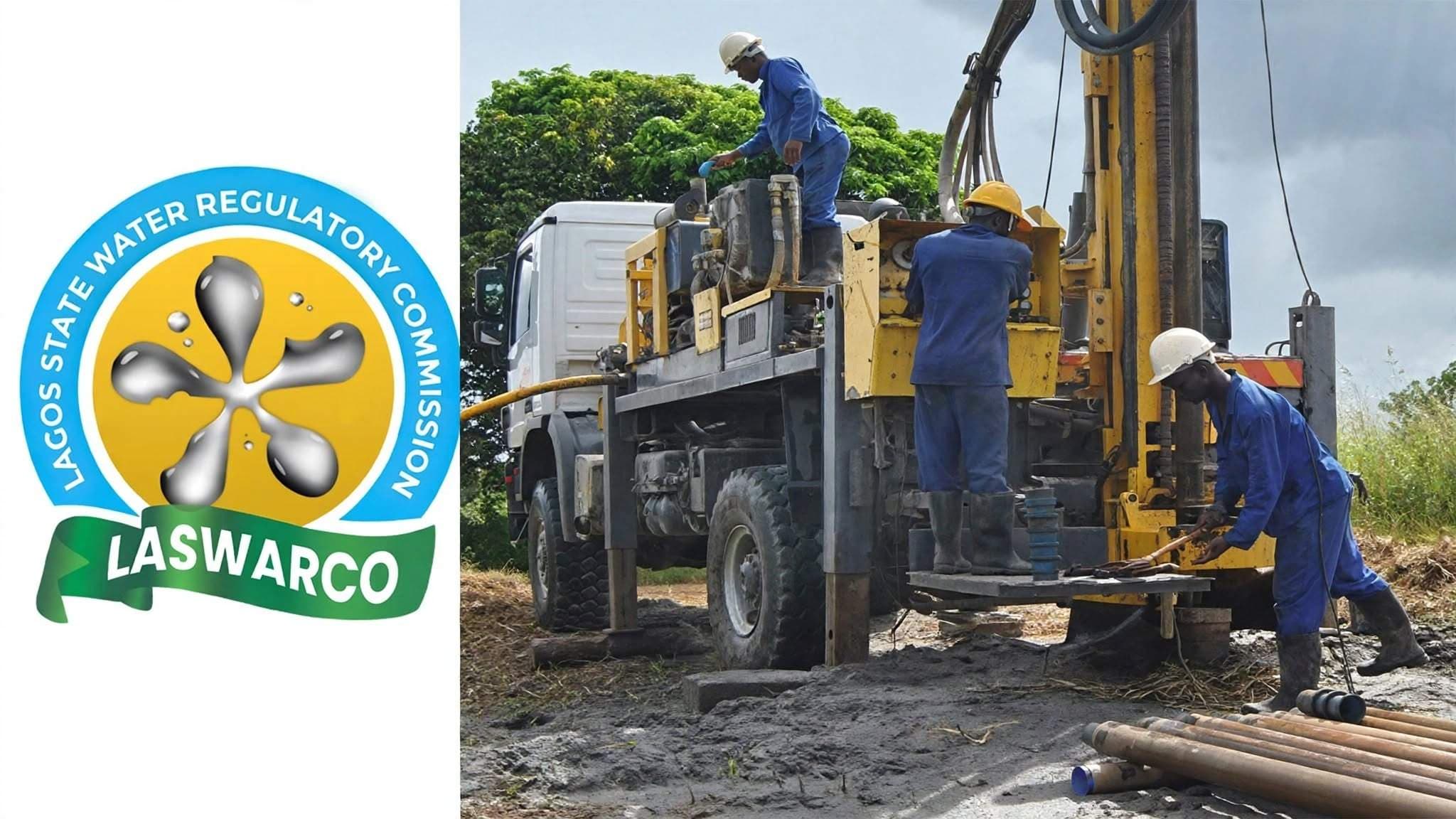
It all started with a statement attributed to Oluwabukola Adeyemo, Executive Secretary of the Lagos State Water Regulatory Commission (LASWARCO), warning that drilling boreholes and extracting groundwater without state authorisation is illegal and could lead to property sealing and criminal prosecution.
LASWARCO even announced a dedicated reporting hotline, asking residents to blow the whistle on unauthorised drilling.
For many working-class Lagosians, that landed like a threat. People started asking: are they really coming for our boreholes now?
OWORAC says LASWARCO needs to urgently clarify what it actually means, because right now, the sweeping tone has created deep confusion and fear in neighbourhoods where water is already a daily struggle.
This is about survival, not luxury.
Let us be real for a second. In Lagos, a borehole is not a lifestyle choice. For most families, it is survival.
Think about Mama Nkechi in Ajegunle, or a young father in Baruwa who has to decide every morning whether to buy fuel for the pump or food for the kids. These are people who have turned themselves into their own mini-water authorities because the public taps have been dry for decades.
And it gets worse in some places. In Baruwa, Iludun, and Ajegunle, years of petroleum pipeline contamination have poisoned the underground water. In coastal areas like Lekki, poor drainage, no centralised wastewater system, sewage pollution and saline intrusion mean you cannot even safely draw groundwater at all.
The result? Families are trapped in water poverty, spending ruinous sums every single day to buy water from third-party vendors while the state looks away.
Where groundwater is still usable, neighbours are literally keeping each other alive — extending taps out to the street, sharing water with the next compound, pooling money for fuel or electricity to keep pumps running.
OWORAC’s point is simple: rather than criminalising these self-funded lifelines, the government should be studying and supporting them.
Wait, what does the law actually say?
This is where it gets really interesting, and it is the heart of the coalition’s argument.
OWORAC says any enforcement must start with what the law actually says — not what the press statements imply.
Under the Lagos State Environmental Management and Protection Law of 2017, the main law LASWARCO is relying on, there is a clear distinction between commercial extraction and domestic survival:
Section 253(1) says a person may, without obtaining a licence from the Lagos State Water Corporation, construct, dig or extend any well or borehole in a residential premises for water supply “to an extent necessary for a supply of water for the domestic purpose of a household.”
Section 259(2) then reinforces it, making it clear that licensing applies strictly to commercial and industrial abstractors.
In plain English? Your home borehole for cooking, bathing and drinking is exempt. The licence is for businesses guzzling water for profit.
The coalition accuses LASWARCO of deliberately omitting those exemptions from its public threats, creating needless panic and even encouraging neighbours to turn on one another over water.
The numbers that make people angry
Here is the data that has really fuelled this row.
Official disclosures by the Lagos Water Corporation show its network accounts for barely 34,424 registered connections. In a megacity of over 20 million people, that is roughly 1.03% direct coverage.
Even if you take the Corporation’s most generous defence — that those connections serve multi-tenant plots covering about 8.3% of residents — that still leaves over 91% of Lagosians completely abandoned by the public grid.
And it is not like the infrastructure is not there. Massive, multi-billion-naira waterworks at Iju, Adiyan, and Ishasi are, in the coalition’s words, rotting away in an embarrassing state of operational underperformance.
To make it sting even more, Section 252 of the 2017 Law insulates the Lagos Water Corporation from paying a single naira in damages or compensation to citizens for total failure or interruption of public water supply.
As OWORAC puts it: “A government that actively absolves itself of the constitutional duty to deliver water cannot legitimately turn around to criminalise and extort citizens who were forced to become their own mini-water authorities.”
The double standard row
This is not just about boreholes. For many Lagosians, this feels like a tale of two Lagos.
The coalition points to late 2024, when LASWARCO held regulatory engagements with multinational giants like Nigerian Bottling Company, Guinness Nigeria, and FrieslandCampina WAMCO. The Commission itself publicly admitted it had spent more than seven years in polite diplomatic discussions despite ongoing compliance defaults.
Seven years of patience for multinationals guzzling millions of litres for private profit, but task forces, sealing and criminal charges for ordinary citizens drawing water for their pots and buckets?
OWORAC argues that if anyone is depleting communal aquifers, it is these mega-extractors, not families trying to survive.
The bigger fear: Is this about privatisation?
Here is the historical perspective many activists are bringing up. Lagos has had a long, controversial debate over water privatisation, with critics warning for years that public water could be handed over to private entities and multinational corporations.
OWORAC says it is not blind to what it calls a “covert agenda” — that the threat to criminalise all boreholes is a calculated siege to herd desperate residents into a captive market and bulldoze communities into forced prepaid water metering schemes.
Their line is clear: “Water is a lifesaving, fundamental human right. Access to it can never be subjected to an exclusionary, pay-or-perish discriminative model.”
What happens next?
The coalition is not just shouting. It has laid out specific demands:
1. Immediate clarification: LASWARCO must publicly confirm that the 2017 law exempts domestic boreholes and wells, and guarantee homes will not face sealing, harassment, or prosecution.
2. Focus enforcement where it matters: Redirect rigorous regulation toward high-volume commercial abstractors and industrial polluters, not households.
3. Fix public water, don’t privatise it: Rehabilitate the derelict waterworks and prioritise universal access to safe, piped public water — not privatising the Lagos Water Corporation.
4. Reform governance: Bring workers, communities, trade unions, and civil society into how the utility is run, with transparent management.
And they have called on Community Development Associations, youth councils, labour unions, artisans, market women, and neighbourhood networks across Lagos to remain vigilant, organised, and ready to defend their domestic lifelines.
Their final warning is stark:
“The state is formally put on notice that any attempt by LASWARCO or armed task forces to enter residential communities, demand illegal permits, or seal domestic boreholes will be treated as an unlawful provocation and met with immediate legal, public, and coordinated mass resistance across every community in Lagos until the social contract of universal public water delivery is fully restored.”
The statement was signed by a long list of leaders, including Adewale Ojo of the Committee for the Defence of Human Rights, Dagga Tollar of the Movement for Socialist Alternative, Zikora Ibeh of CAPPA, Hassan Taiwo Soweto of the #EndBadGovernance Movement, Gbenga Komolafe of FIWON, and community leaders from Baruwa, Iludun, Ifako Ijaiye, Oworo and Ajegunle, among many others.
So now, all eyes are on LASWARCO. Will it clarify? Will it back down on domestic boreholes? Or are we heading for a full-blown showdown over water in Lagos?
One thing is certain — in a city where over 91% of people are off the public water grid, this is not just policy. It is personal.
Source: cbinewstv.com
#LagosWaterCrisis #OurWaterOurRight #BoreholeCrackdown #LASWARCO #Lagos #WaterIsAHumanRight #OWORAC #PublicWaterNotPrivateProfit #EndWaterPoverty